 Orlando Water Filtration Pros
The damage is real
Your new home will not look new for long — unless you treat the water.
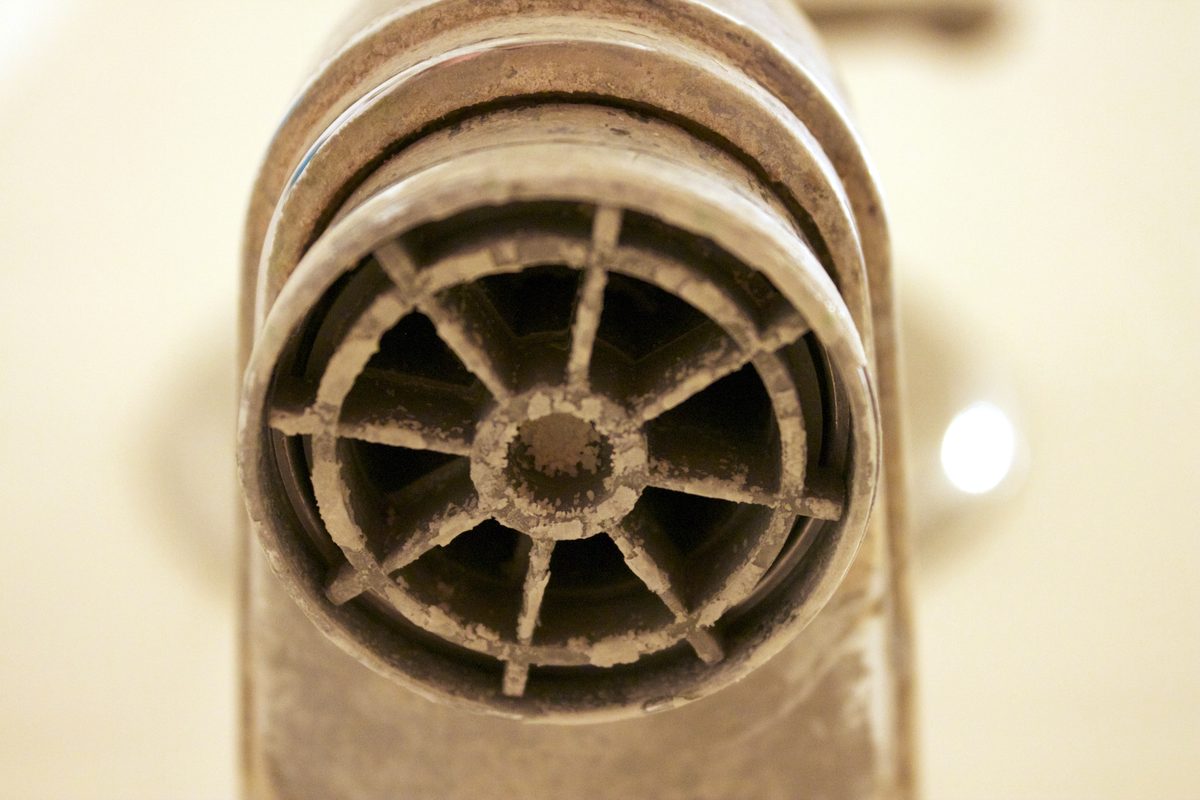
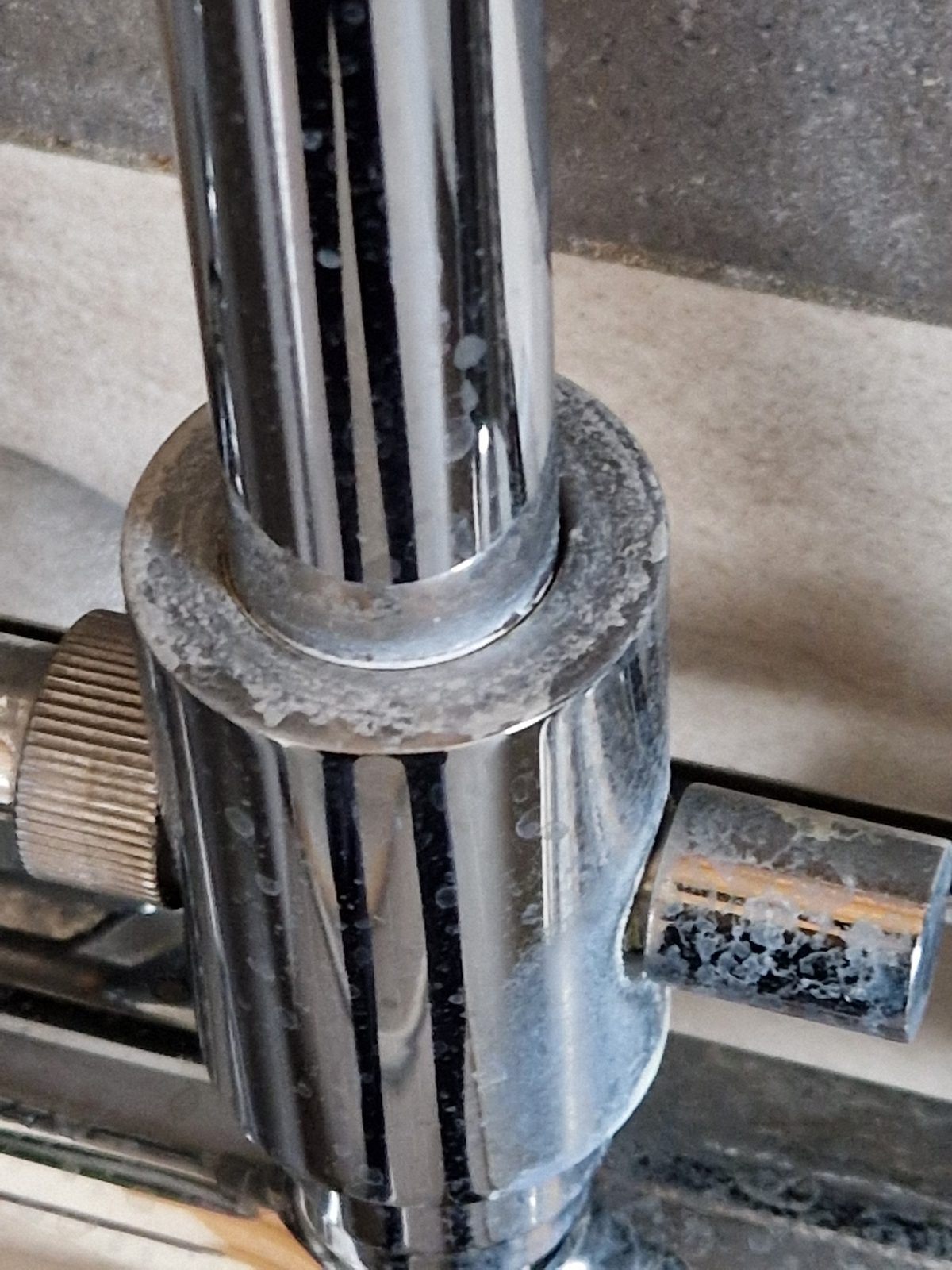
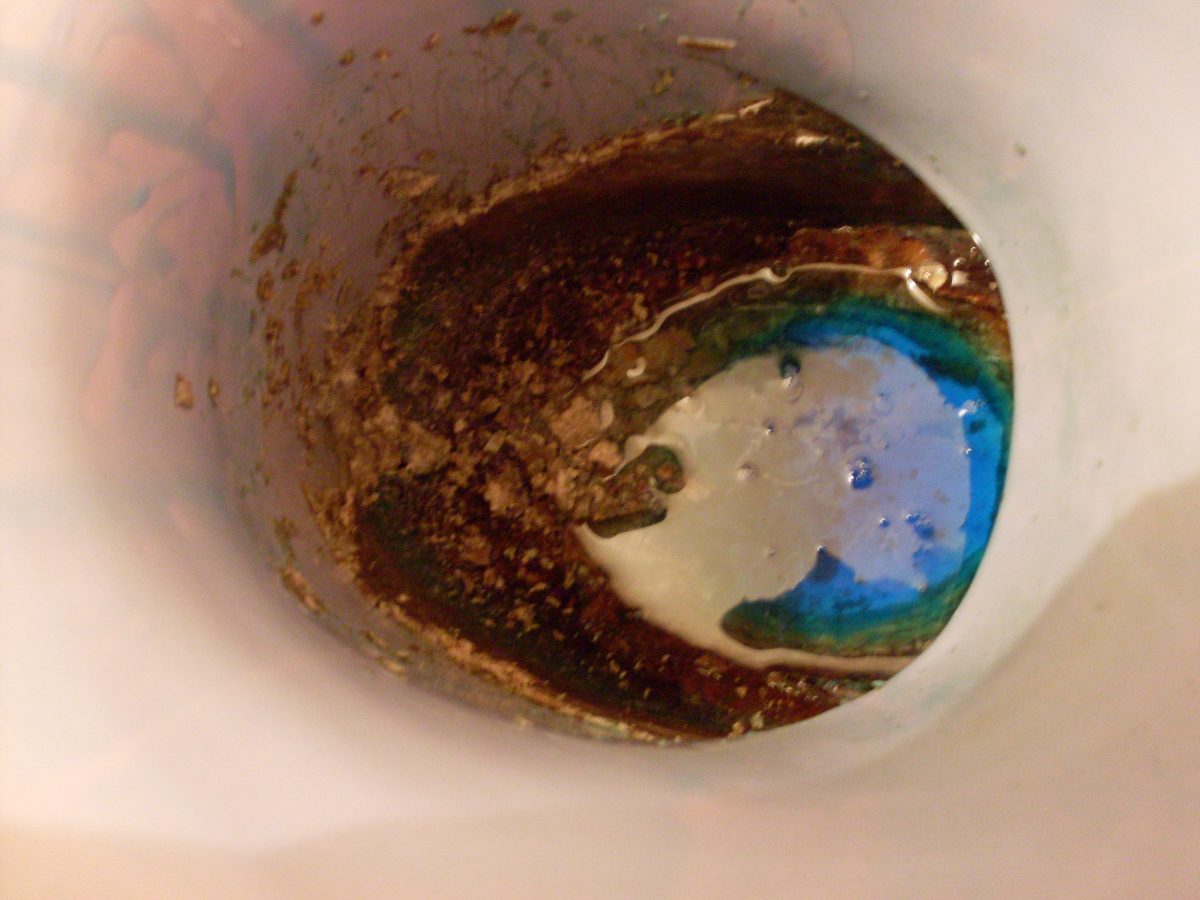
These are real photos of what untreated hard water does to fixtures and appliances. A brand-new faucet, a sparkling toilet, a dishwasher that runs like new — in Orlando, a few years of mineral-heavy water turns them into this:
Shiny chrome. Full, even flow. Wipes clean in seconds.
Clean porcelain or stainless. No stains, no scrubbing marathons.
Bright white bowl. A quick brush keeps it clean.
Clean metal element. Heats water fast and sips energy.

Full-diameter pipe. Strong pressure at every tap.
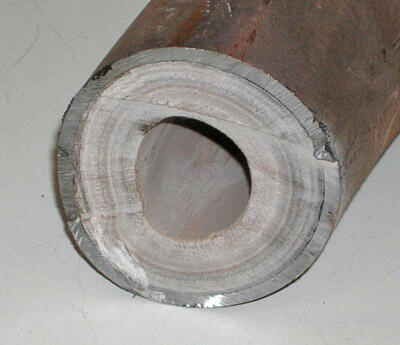
Illustrative comparison: each “day one” panel describes a new fixture, while the photos show real mineral damage caused by hard water (licensed images of different fixtures — not the same ones pictured on the left).
Taste & smell
Does your tap water smell like a swimming pool?
You are not imagining it. OUC — Orlando’s water utility — is required by law to add chlorine disinfectant (sodium hypochlorite) to keep water microbiologically safe as it travels through miles of pipes to your tap. OUC’s 2025 Water Quality Report shows chlorine averaging 1.2 parts per million across the year (ranging 0.2–2.2 ppm) — well under the federal limit of 4 ppm — yet plenty of people can smell and taste chlorine at levels far below the legal limit. Warm water releases even more of that smell, which is why it is strongest in a hot shower or bath.
And it is not just drinking water. Your family cooks with it, cleans with it, and bathes in it. Parents tell us bath time for small kids — little ones sitting and splashing in a tub of chlorinated water — can feel uncomfortably like sitting in a swimming pool.
To be clear: chlorine disinfection does an important job, and OUC’s water meets all federal and state standards. But “safe” and “pleasant” are not the same thing — and you do not have to live with the smell, taste, and feel. A whole-home carbon filter removes chlorine at every tap, so the pool smell is gone from the kitchen, the shower, and the tub.
Drinking water
An RO faucet at your kitchen sink — stop buying bottled water.
Most of our installs include a reverse-osmosis drinking-water system with its own dedicated faucet right at the kitchen sink, next to your main faucet. It filters all your drinking and cooking water at the point of use — removing dissolved solids, chlorine taste and odor, and many common contaminants.
Here is the math families love: if you are already buying case after case of plastic bottled water because you do not trust the taste of Florida tap water, you are already paying for better drinking water — just in the most expensive, least convenient way. With an RO faucet, you fill reusable bottles for the gym, the car, and the kids’ lunches straight from your own sink.
Fewer plastic bottles to haul, store, and recycle — and water that tastes clean every time. And since you are already getting a water system, the RO faucet solves the drinking-water problem in the same visit.
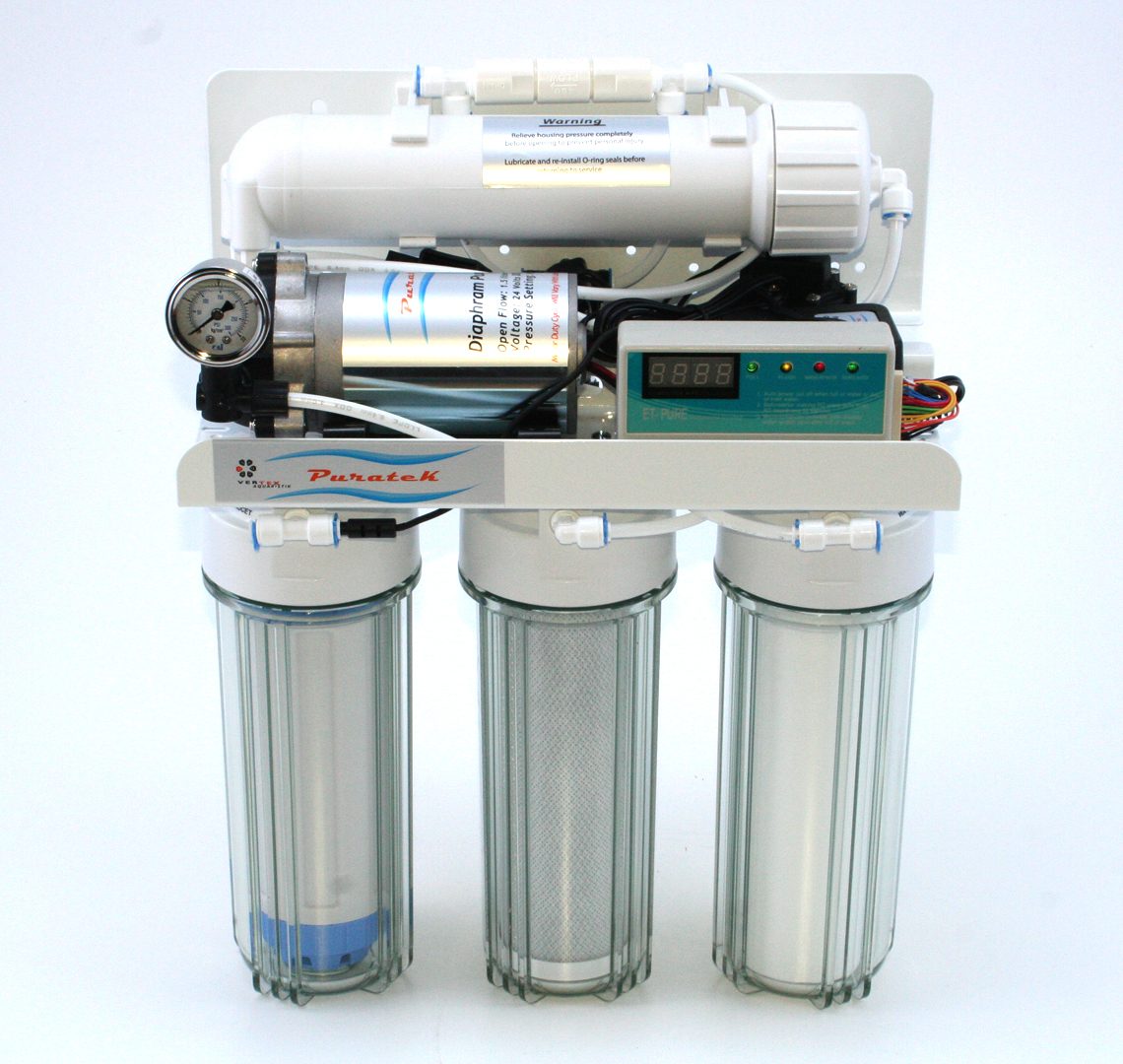
Photo: Kingfish101, CC BY-SA 3.0, via Wikimedia Commons (shown: RO/DI unit; home under-sink RO systems are similar)
Cleaner cleaning
Your natural cleaners are fighting your water.
Calcium and magnesium in hard water bind with soap — cutting lather, leaving soap scum, and forcing you to use more product. It is such a known problem that conventional detergents build water softeners right into the formula: a large share of many detergents is just chemistry to fight the minerals. Natural and organic cleaners skip those additives — which is why they underperform in hard water.
Remove the minerals and everything changes: natural and organic shampoos, body wash, dish soap, laundry soap, and all-purpose cleaners lather and rinse the way they are supposed to, work correctly in washing machines, and typically need less product per load. Every customer gets our guidance on organic cleaning products as part of the service.
Orlando water, decoded.
Most of Greater Orlando's water comes from the Floridan Aquifer — deep, mineral-rich, and naturally hard. Add city chlorine disinfection, and the result is water that meets federal and state standards but leaves scale on fixtures, spots on dishes, dry skin and hair, and a chlorine taste most families would rather not drink. The first step is knowing exactly what's in yours — which is why the in-home water test is free.
🏠 Whole-Home Water Filtration
Filtered water at every tap — chlorine, sediment, and odors removed before water reaches a single faucet.
Filter the whole home →💎 Water Softeners
End hard-water scale for good — softer skin and hair, spot-free dishes, and appliances that last years longer.
Soften your water →🥤 Reverse Osmosis Systems
Bottled-water quality from your kitchen sink — RO removes what filters and softeners leave behind.
Get RO drinking water →🛢️ Well Water Treatment
Sulfur smells, iron stains, sediment — complete treatment for private wells across Greater Orlando's outlying areas.
Fix well water →🧪 Free Water Testing
A specialist tests your water in your home, shows you the results on the spot, and recommends only what you need.
Schedule my free test →🏢 Commercial Filtration
Restaurants, offices, rentals, and HOAs — better water for customers, tenants, and equipment.
Water for business →Water quality resource
Know what is in your water.
We put together a plain-English guide to Orlando-area water quality — where it comes from, what is in it (hardness, chlorine, disinfection byproducts, sediment, sulfur, tannins, and lead), what the official reports say, and what they cannot tell you about your own home. Every claim links to the government source so you can check it yourself.
How the free water test works.
One call sets up a convenient time — evenings and weekends available.
Hardness, chlorine, TDS, pH, and iron — you see every result as it's measured.
Only the equipment your water actually needs. No test result, no sales pitch.
Serving Greater Orlando.
Free in-home water tests and professional installation across the metro:
Good to know before your test.
Is the water test really free?
Yes — completely free, with no obligation. The specialist tests your water, explains the results, and recommends equipment only if your water actually needs it. See how the free water test works.
Does Orlando have hard water?
Yes — most of Greater Orlando sits in the moderately-hard to hard range, drawn from the mineral-rich Floridan Aquifer. Read our breakdown of Orlando's hard water.
What's the difference between a softener and a filter?
A softener removes hardness minerals (calcium, magnesium); a filter removes chlorine, sediment, tastes, and odors. Many Orlando homes benefit from both — the whole-home filtration and water softener pages explain each.
Do I need reverse osmosis too?
Not every home does — but if you want truly pure drinking water, an under-sink RO system is the gold standard. Your free test results will show whether your water warrants one.
From the blog.
Stop guessing about your water.
Schedule your free in-home water test today — see your results in minutes, and only buy equipment your water actually needs.